On Being Brought into the Kingdom
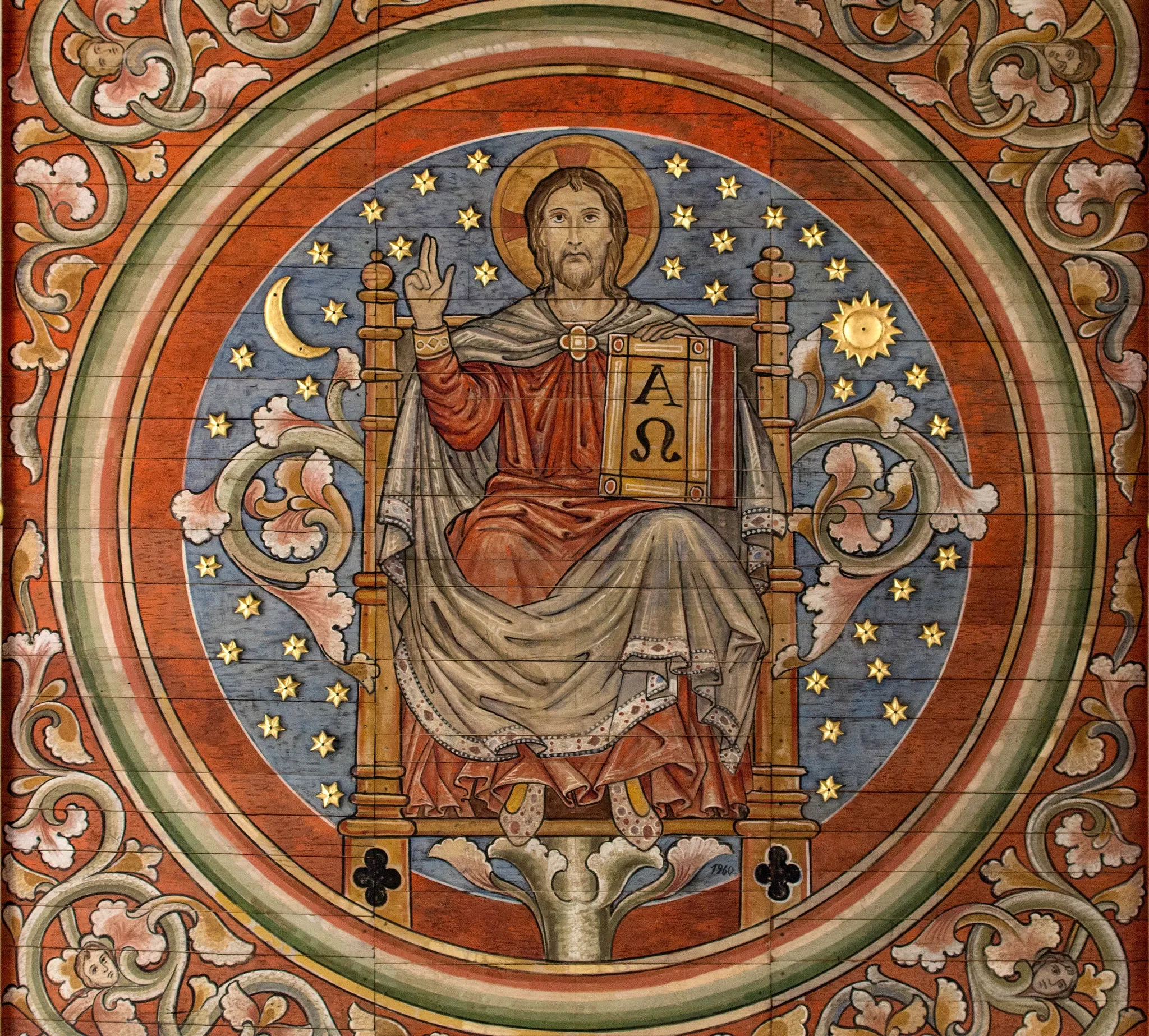
Image credit: Lawrence OP. Used under a Creative Commons license, CC BY-NC-ND 2.0.
Q. What did the Messiah promise in the New Covenant?
A. Christ promised to bring us into the kingdom of God and give life in all its fullness.
As we come to the second catechism question on the New Covenant, we are already confronted with its result—what, in other words, is the payoff of living under this covenant? The catechism names two pieces: the promise of life in its fullness and of being brought into the Kingdom of God. The first is already addressed to a certain extent in our introductory discussion of the nature of humanity, and we will arrive at it again in the questions on the Christian hope. Suffice it to say, life in its fullness means undying and unsuffering life, integrity of self, unruptured relationship with other people and creation, and, our ultimate purpose, full union with God. Stick a pin in that for now.
The real question for discussion today is this business of being brought into the Kingdom of God. At its root, the Kingdom of God—or, in Matthew's Gospel, the Kingdom of Heaven (out of a profound Jewish respect for the name of God and desire to avoid taking the Lord's name in vain)—is that place where God rules in fullness, where nothing stands in the way of God's will being done. For much of Christian history, this was largely a distant, "future" reality, something that existed either in heaven or in the New Creation, the world as it will be in the totality of its restored nature (note: this is not the same as a hope for the soul going to heaven as the Christian hope; this is a distortion of the orthodox Christian hope for the resurrection of the body always affirmed throughout Christian theological history). Nonetheless, for most of Christian history, the focus was on this as (a) something in the future or beyond time and (b) fully brought about by God.
With the advent of modern biblical criticism, there emerged a significant focus on the fact that Jesus proclaimed not just the coming of the Kingdom of God but in fact how it is breaking into the world as it is now. Whereas before, the focus of the tradition was on Christ's death and resurrection as the fulfillment of his ministry and the inauguration in some way of the Kingdom, this opened the door to seeing the Kingdom as a potentially present ordering of society, with Jesus pointing away from himself and toward this possible utopic social arrangement.
This modern shift comes to its fullest form first in the Social Gospel movement, inaugurated and exported most fully in the writings of Walter Rauschenbusch. Regardless of the nuance of Rauschenbusch's own thought, as this developed and has been picked up in much of the mainline and especially progressive Christian traditions, it led to a sense that the Christian call is to "build the Kingdom now": what Jesus offers us is a blueprint for the perfect society (one that looks remarkably like twentieth-century social democracy, conveniently), but it is up to us Christians to work to bring it about. Certainly this tradition will be found alive and well in the pews of many Episcopal congregations, and versions of it can be found in learned works such as that of Verna Dozier in her The Dream of God.
There is much in this tradition of "working toward" or "building" the Kingdom to commend itself to us. It often corrects for an undue focus on individual salvation, or for the way an exclusive hope of the life "hereafter" can act as a brake on efforts to improve conditions in the world now or to liberate the oppressed. That said, the Anglican tradition, and indeed the Episcopal Church's belief, defined as it is by Scripture read through the Creeds, the Catechism, and the sacramental rites of the prayer book, rejects a belief either that we build or bring about the Kingdom or that it will be fully realized in the world as it is. Even this question militates against our "building" the Kingdom: "Christ promised to bring us into the kingdom of God." This is not something that we bring about through our power, but something we are brought into. This emphasis on the Kingdom as something God brings about, not something we build, is reiterated, for instance, in a collect for the mission of the church in which we pray that God "hasten the coming of your kingdom" (BCP 257).
Pushing against the idea that we build the Kingdom, even with God's help, is important for a number of reasons. First, reckoning with the reality of Sin in the world—not as only the result of social imperfections or ignorance or any other structural features of the world, as much of the Enlightenment tradition has suggested, but as a deep distortion of the still nonetheless good creation—we have to recognize that there will always be evil that can never be eradicated through reform or revolution. One need not look much further than the totalizing utopic schemes of both Revolutionary France and the early Soviet Union to see the great evils that can be unleashed in the name of totally recreating society—even as this is the attempt to totally root out evil and oppression! Second is an idea highlighted by the Catholic political theologian Johann Baptist Metz: namely, that a kingdom built in time can never achieve the true and radical justice that Christ seems to promise. Even if we were to be able finally to achieve a community on earth modeled on the ideal of the Kingdom of God, such a community would only ever benefit and bring justice to those alive to see it. What, though, of the myriad dead, crushed by the overwhelming injustices of the past? They would never see or experience this justice. Thus, the only truly universally just state is one in which all the evils of history are set right on the other side of the resurrection of the dead.
Nonetheless, I think we lose sight of the lessons of the Social Gospel movement, or of the many forms of liberation theology (themselves, importantly, often not as utopic as the Social Gospel), by retreating back to an individualist, quietist view of the Kingdom of God. To say that the final restoration of all things is something only God can bring about does not absolve us of our responsibility to live in a kind of "as though" state. The Kingdom, the New Creation, has already been inaugurated in the resurrection of Christ. Insofar as we live in the power of the resurrection, however imperfectly or incompletely, we are still empowered to anticipate the Kingdom and point to the places where it breaks into our midst—most notably in the Eucharist and the community formed around and through it. We live as much as we can as though in the Kingdom of God not because we think we're bringing it about, but as a way of pointing to what God is already beginning to do in our midst and as a signpost to point toward what God will do in the culmination of all things.